

Are Patents Public Record? The Open Book of Innovation
If you’ve ever had a “Eureka!” moment, your next thought was likely: How do I protect this? But right after that comes the realization that protecting an idea usually means telling the government exactly how it works. This leads to a fundamental question for inventors, entrepreneurs, and the curious alike: Are patents public record?
The short answer is a resounding yes. In fact, the very word “patent” comes from the Latin patere, which means “to lay open.” When you receive patent protection, you aren’t just getting a legal shield; you’re entering into a social contract. You get a temporary monopoly on your invention, and in exchange, you share your blueprints with the world.
Why Are Patents Public Record?
It might seem counterintuitive to show your hand if you want to stay ahead of the competition. However, the patent system is designed to fuel progress, not stifle it. By making patents public record, the government ensures:
- Transparency: Everyone knows exactly what is protected and what isn’t, preventing accidental infringement.
- Innovation: Builders and dreamers can look at existing patents to see where technology currently stands, allowing them to “stand on the shoulders of giants” rather than reinventing the wheel.
- Prior Art Verification: Public records allow patent examiners to ensure an invention is truly new and hasn’t been done before.
Are US Patents Publicly Available?
Absolutely. In the United States, the United States Patent and Trademark Office (USPTO) maintains a massive, searchable database of every granted patent and most patent applications. Whether it’s a revolutionary pharmaceutical formula or a quirky gadget from the 1920s, if it was patented in the U.S., it’s in the public record.
The 18-Month Rule
It is important to note that a patent isn’t usually public the second you file it. Generally, the USPTO publishes patent applications 18 months after the earliest filing date. Until that point, your “patent pending” idea stays under wraps. Once that window passes, the details—including drawings, claims, and descriptions—are open for the world to see.
Can Anyone Do a Patent Search?
You don’t need a law degree or a secret password to look into patent records. Anyone with an internet connection can perform a patent search. This democratization of information is a goldmine for:
- Inventors: To check if their idea is truly original.
- Researchers: To track the evolution of a specific technology.
- Competitors: To see what “the other guys” are working on.
Where Can I Look Up Patents?
Gone are the days of digging through dusty paper files in a government basement. Today, you can access patent data through several high-powered digital tools:
- USPTO Patent Center: This is the official source. It’s the most authoritative place to find granted patents, pending applications, and the “File Wrapper”—which is the entire history of communication between the inventor and the patent office.
- Google Patents: Perhaps the most user-friendly interface. It indexes patents from all over the world and makes searching as easy as a standard Google query.
- Espacenet: Operated by the European Patent Office (EPO), this is a fantastic tool if you are looking for international or “patent family” information.
How Do I See Who Owns a Patent?
Finding the inventor is easy—their name is right on the front page. However, the inventor isn’t always the owner. Many inventors “assign” their rights to their employers or sell them to other companies.
To find the current owner, you need to look at Assignment Records. Both the USPTO and third-party databases allow you to search for these transfers of ownership. By looking at the assignment history, you can see if a patent has changed hands, been used as collateral for a loan, or been moved into a holding company.
Are There Any Exceptions to Patents Public Record?
While the system leans heavily toward transparency, there are two main exceptions where a patent remains private:
- Provisional Applications: These are “placeholder” applications that give you a filing date but are never published by the USPTO unless a formal non-provisional application follows.
- Non-Publication Requests: In rare cases, an inventor can request that their application not be published, but this only applies if they do not intend to file for patent protection in any other country.
Summary of Why Are Patents Public Record
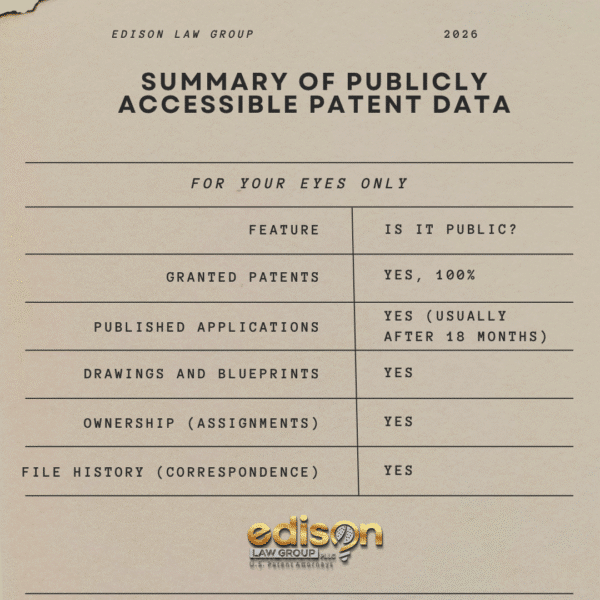
Understanding that patents are public record is the first step in navigating the world of intellectual property. Whether you’re looking to protect your own “big idea” or just curious about how a specific piece of tech works, the answers are out there—just a few clicks away.