Tesla Patent Could Turn Glass Roof Into a Smart Air Conditioner
This Tesla patent may be rethinking the purpose of the panoramic glass roof with new Tesla patents for advanced air conditioning and climate control. Instead of treating the glass roof as simply a stylish feature, Tesla is exploring technology that could turn the roof into an active part of the vehicle’s HVAC system.
The concept could help cool a Tesla’s interior more efficiently, reduce the amount of energy required for air conditioning and potentially preserve some EV battery range during hot weather.
Tesla has published thousands of patents covering electric vehicles, autonomous driving, battery technology and vehicle design. One of its newer ideas involves a perforated glass roof, while another Tesla patent describes an HVAC system designed to remove hot air from specific areas inside the vehicle.
How the Tesla Glass Roof Could Become an Air Conditioner
Tesla’s perforated glass roof patent describes a multi-layer roof consisting of an exterior glass panel, an air-filled honeycomb structure and an interior glass layer containing tiny openings.
The space between the two glass layers could measure up to approximately 6 millimeters. The perforations in the interior layer could range from about 0.05 to 2 millimeters in diameter. The basic idea is surprisingly simple: connect the Tesla air conditioning system to the roof.
Cool, conditioned air could enter the space between the glass layers and spread throughout the honeycomb structure. The cooled air would then gradually move through the small openings in the interior glass and into the passenger compartment. Rather than relying entirely on dashboard vents to cool the cabin, the Tesla panoramic roof could essentially function as a large overhead air diffuser.
Tesla HVAC Technology Could Target Hot Spots
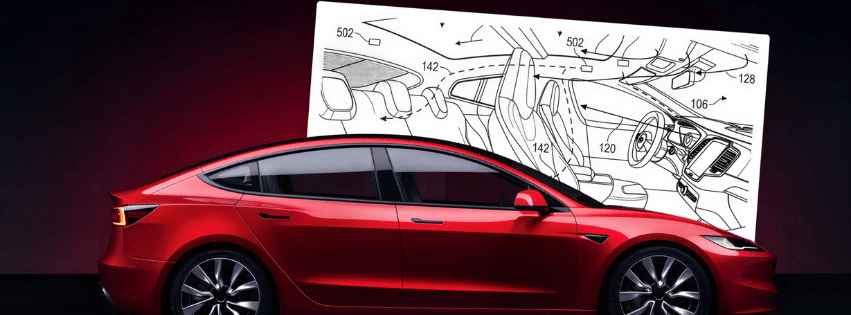
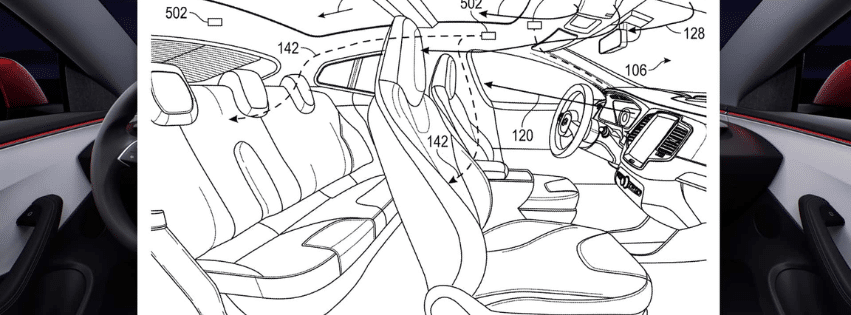
Tesla is also exploring a second approach to electric vehicle climate control. Another Tesla patent describes an HVAC system capable of using suction to remove heated air from areas inside the cabin where temperatures commonly increase. These areas could include the dashboard, headliner and portions of the vehicle near the windshield and glass roof.
Instead of allowing pockets of extremely hot air to mix with conditioned air, the system could actively pull that heat away using existing ventilation components. Temperature and sunlight sensors could determine when these hot spots are developing and activate the suction system only when necessary.
This type of Tesla climate control technology could make the air conditioning system more efficient because the HVAC system would not have to work as hard to overcome concentrated pockets of heat.
Could Tesla’s Smart Air Conditioning Increase EV Range?
One of the biggest potential advantages of the Tesla patent is energy efficiency. Air conditioning can consume considerable electricity when an electric vehicle is parked or driven in extreme temperatures. For Tesla owners, that means more battery energy is being used to maintain a comfortable cabin instead of powering the vehicle down the road.
Tesla’s patented HVAC concept has been associated with an estimated reduction in cabin temperature differences of approximately 43%, while reports have cited a potential 7.4% reduction in HVAC energy consumption.
Even though that would not translate directly into a 7.4% increase in driving range, reducing air-conditioning power consumption could leave additional battery capacity available for propulsion. For an electric vehicle, small efficiency improvements can become increasingly important as automakers look for ways to extend EV range without simply installing larger and heavier batteries.
Could the Tesla Glass Roof Also Help in Winter?
The technology could potentially have applications beyond Tesla air conditioning.
The patent indicates that airflow through the roof could potentially be reversed during colder weather. Instead of distributing cool air, heated air could potentially be directed through the roof structure. That could provide another method of warming the cabin or assisting with defrosting. It would make the panoramic roof part of a broader Tesla HVAC system capable of managing both heating and cooling.
Will Tesla Actually Put This Technology Into Production?
For now, Tesla’s smart glass roof and advanced HVAC concepts remain patents rather than confirmed production features.
Tesla patents do not necessarily mean a technology will eventually appear in a Model S, Model 3, Model X, Model Y or future Tesla vehicle. There is currently no confirmed production timeline for the perforated roof system.
There are also practical challenges. A honeycomb glass roof with integrated airflow channels would be considerably more complicated than a conventional panoramic roof. Manufacturing costs, durability, repairs and damage from road debris would all have to be considered.
Nevertheless, the Tesla glass roof patent illustrates how automakers are looking for efficiency improvements beyond batteries and electric motors. If Tesla can successfully turn its patented smart air conditioning and climate-control technology into a reliable production system, the panoramic roof could eventually do much more than provide passengers with a view of the sky—it could actually help keep the entire Tesla cabin cooler while using less energy.