
11 Revolutionary Black Inventors Who Changed the Modern World
Black Inventions That Will Have You Questioning Everything You Learned In School
Think about your morning routine for a moment. You brush your hair, hop in a car and cruise through a traffic light, toss a load of laundry in the dryer, and take the elevator up to your office. What do all of these everyday moments have in common? Every single one of them traces back to Black inventors. Chances are, nobody taught you that in school. So here’s a rundown of 11 groundbreaking inventions patented by Black inventors over the past 150 years, how they came to be, and just how dramatically they’ve evolved since their debut.
1. The Super Soaker – Lonnie Johnson, 1986
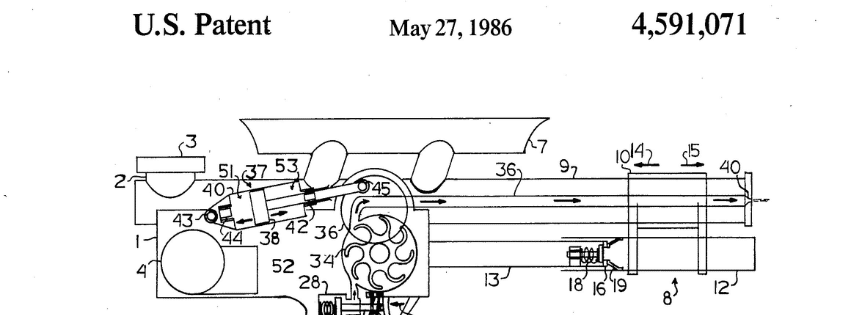
Lonnie Johnson was a NASA aerospace engineer who, in 1982, was tinkering with a heat pump that used pressurized water in place of Freon. When he accidentally attached a nozzle to his bathroom sink, a powerful stream of water shot across the room and an idea was born. His first prototype was cobbled together from PVC pipe, acrylic, and a two-liter soda bottle. After seven years of rejections from toy companies, Larami Corporation finally took a chance on him in 1989. The toy hit shelves in 1990 under the name “Power Drencher” before being rebranded as the Super Soaker, and within just two years it had generated over $200 million in sales.
2. The Gas Mask – Garrett Morgan, 1914
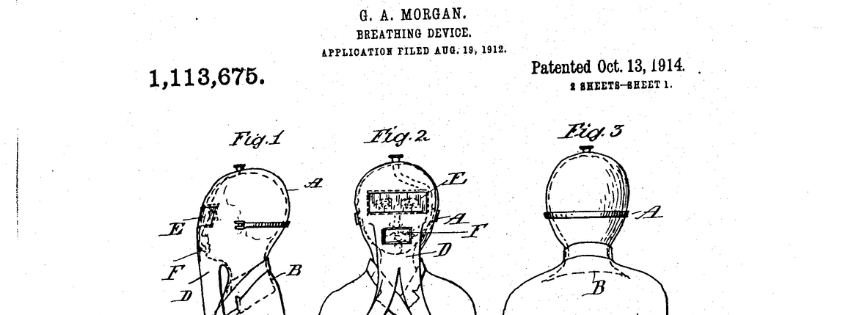
Garrett Morgan created his “Safety Hood and Smoke Protector” with firefighters in mind, designing a canvas hood with a long tube positioned near the floor to draw in the cleaner air found closest to the ground. He proved its worth in dramatic fashion in 1916, when a gas explosion trapped workers 250 feet beneath Lake Erie. Morgan, his brother, and other volunteers strapped on the hoods and descended into the tunnels to pull survivors out. Despite this heroic demonstration, racial prejudice made white officials reluctant to buy from a Black inventor, so Morgan resorted to disguising himself as a Native American inventor named “Big Chief Mason” and hired white actors to market the device. It eventually found widespread adoption among US soldiers during World War I and played a meaningful role in modernizing firefighting equipment.
3. The Three-Position Traffic Signal – Garrett Morgan, 1923
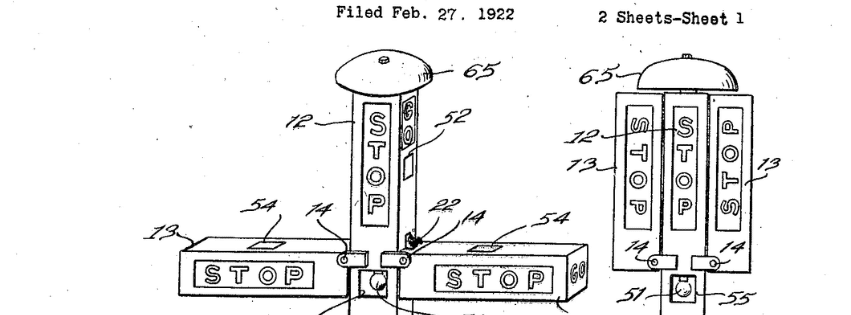
Morgan makes the list twice, and for good reason. After witnessing a brutal collision between a car and a horse-drawn carriage on the streets of Cleveland, he set out to improve on the two-position traffic lights of the day, which only offered stop and go. His T-shaped, hand-cranked design introduced a third position, the caution or yellow light, giving intersections time to clear before traffic moved again. General Electric eventually purchased the rights to his invention for $40,000, laying the foundation for the automated electric traffic lights we rely on today.
4. The Home Security System – Marie Van Brittan Brown, 1966
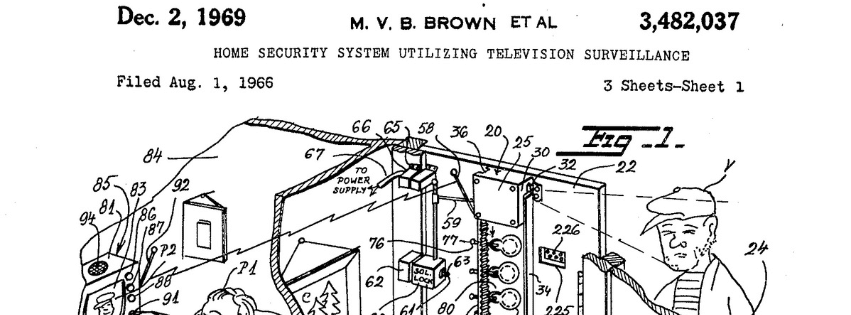
Working late-night nursing shifts in Jamaica, Queens, Marie was understandably concerned about her safety at home. Together with her husband, an electronics technician, she developed a closed-circuit television system that allowed her to monitor her front door without opening it. The setup included a camera that could slide between four peepholes, a home monitor showing live footage, a microphone for communicating with visitors, a remote door-unlock mechanism, and an alarm button to alert police or neighbors. Though it never went into mass production, her 1969 patent was cited by countless later systems and is widely credited as the foundation for modern video doorbells and smart home security.
5. The Golf Tee – Dr. George Franklin Grant, 1899
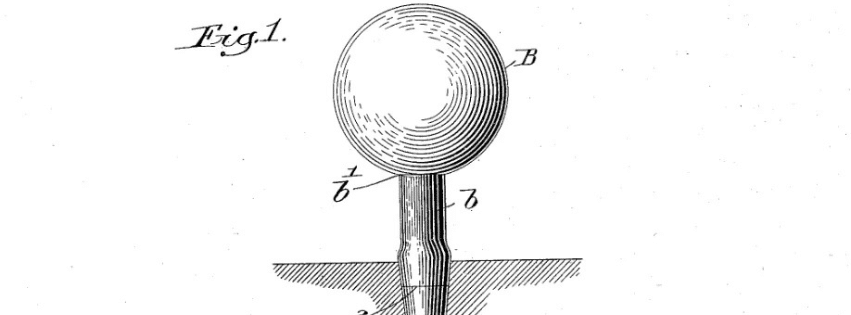
Boston dentist and passionate golfer George Grant grew tired of having to rebuild sand tees throughout every round. His solution was an elegant wooden tee topped with a gutta-percha rubber crown to cradle the ball. Grant never sought to commercialize the invention, preferring instead to have them made locally and hand them out to friends. His contribution went largely unrecognized for nearly a century until the USGA formally acknowledged him in 1991. Grant was also the first Black faculty member at Harvard University.
6. The Synthetic Bristle Hairbrush – Lyda D. Newman, 1898
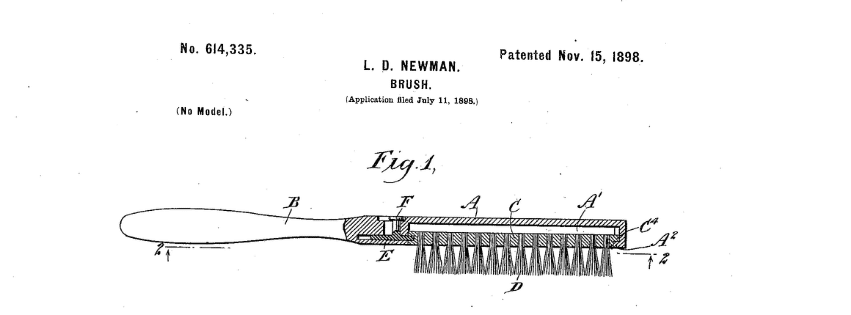
As a hairdresser, Lyda knew firsthand that the animal-hair bristles used in most brushes of the era were far too soft to work effectively with the natural texture of Black hair. She replaced them with synthetic fibers that were both sturdier and easier to clean. Her brush featured evenly spaced bristle rows with open slots to channel debris into a hollow compartment, with a button on the back to open it for quick cleaning. Lyda was also just the third Black woman in history to receive a patent.
7. The Automatic Gear Shift Transmission – Richard B. Spikes, 1932
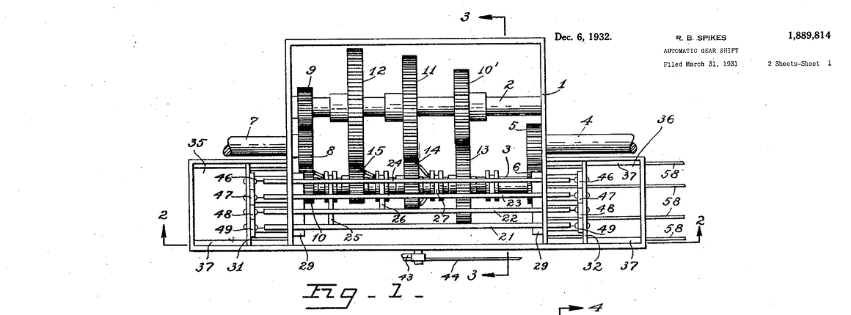
Richard Spikes developed a transmission system that used constant mesh gears to allow for smooth, automatic gear shifting, reducing the mechanical strain on vehicles and making them significantly easier to drive. While he wasn’t the first to attempt an automatic transmission, his refinements were critical stepping stones toward the modern automatic systems found in virtually every car on the road today.
8. The Automatic Clothes Dryer – George T. Sampson, 1892
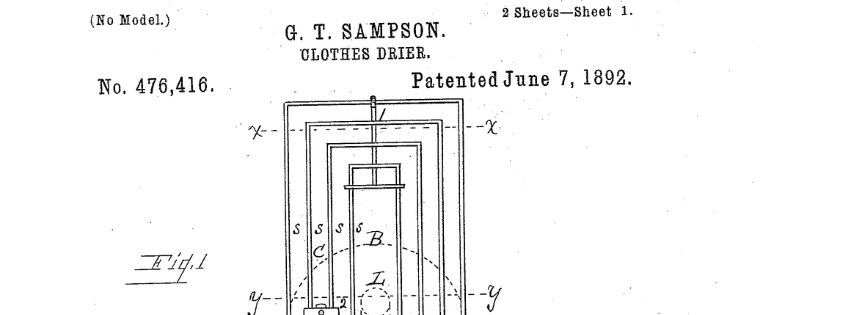
Early clothes drying relied on metal drums with ventilation holes that were hand-cranked over an open fire, a process that left garments smelling like smoke and dangerously close to open flames. Sampson’s design removed the fire from the equation entirely, replacing it with a controlled heat source and a suspended frame that held clothing safely above a stove. The result was faster, cleaner, and far safer drying, and it established the fundamental principles that would guide dryer development for generations to come.
9. Automatic Elevator Doors – Alexander Miles, 1887
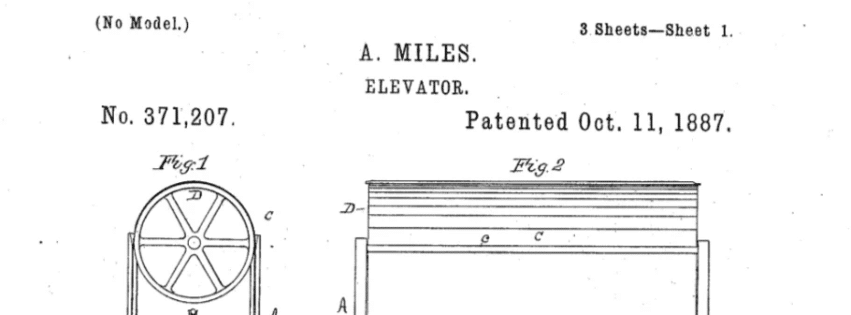
In the 1880s, elevator shaft doors had to be manually opened and closed by passengers or operators, leaving dangerous open shafts that caused fatal accidents. After witnessing this hazard firsthand, Miles engineered a mechanism using a flexible cable attached to the elevator car that automatically triggered the opening and closing of shaft doors through a system of levers and rollers. His design became the industry standard and is the direct ancestor of the automatic elevator doors we step through without a second thought today.
10. The Improved Toilet Paper Holder – Mary Beatrice Davidson Kenner & Mildred Davidson, 1982
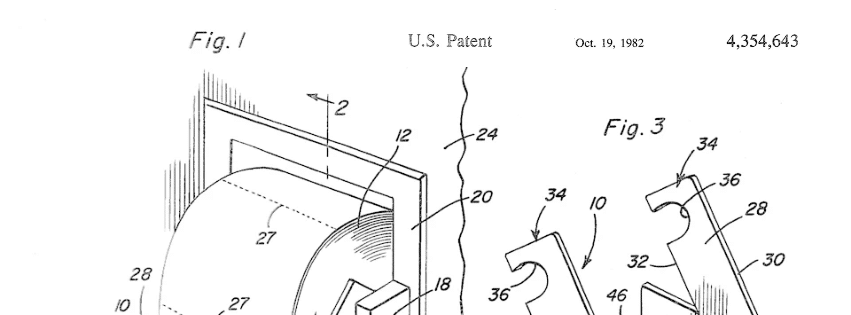
The sisters tackled one of the most universally frustrating bathroom problems: the toilet paper end going flat against the roll and becoming impossible to find. Their improved holder kept the paper end in an accessible, easy-to-grab position at all times. Mary was also the inventor of the sanitary belt, and her career was defined by practical innovations designed to make everyday life more convenient.
11. The Door Knob – Osbourn Dorsey, 1878
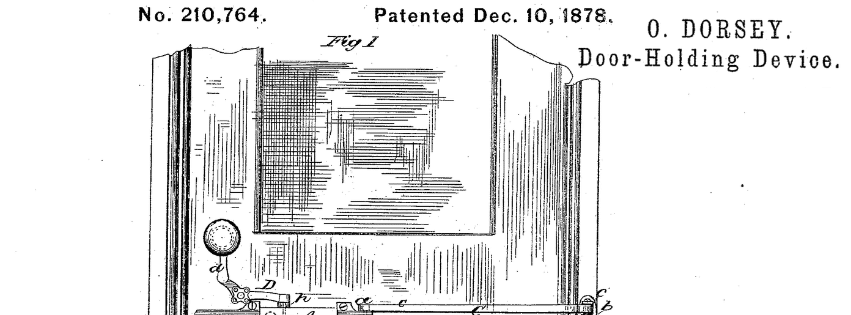
Before Dorsey’s invention, most doors were secured with basic string latches or simple bolts. His “door-holding device” went further than just providing a handle — it was engineered to hold a door at a chosen angle, preventing it from swinging shut in a draft and protecting glass panels in the process. The design incorporated a knob-spindle, a slotted collar, a sliding pin, a toothed lever, and a latch mechanism that together offered far greater security and ease of use. Dorsey’s invention became standard in homes and public buildings worldwide. Perhaps most remarkably, he was approximately 16 years old when he filed the patent.
Together, these inventions reveal
how Black innovators shaped technology in ways still felt today. Their creativity improved safety, convenience, and comfort in homes and cities alike—quietly rewriting the story of everyday life. These inventors didn’t just create gadgets; they solved fundamental problems of safety, hygiene, and convenience. Their legacies are built into the very fabric of our daily lives.