Motorola Patents a Smartwatch That Unfolds Into a Smartphone
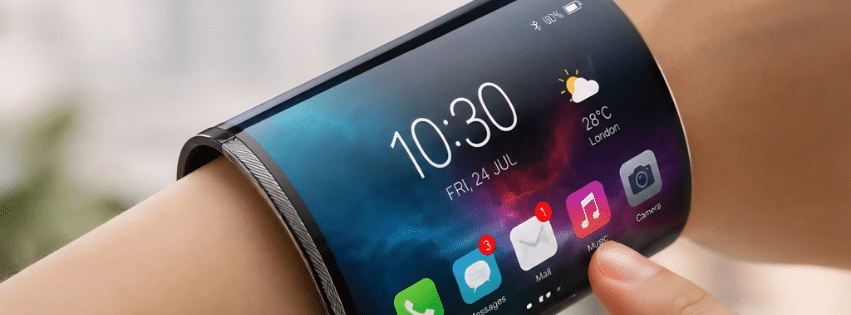
Motorola is exploring a futuristic new device that could blur the line between a smartwatch and a smartphone. A newly granted U.S. patent describes a wearable with a flexible, reconfigurable display that can wrap around the wrist like a smartwatch and then transform into a larger handheld screen when needed.
The patent, US12,693,705, titled “Pivoting Wearable Reconfigurable Screen,” was awarded in July 2026. While the technology is still only a patented concept and Motorola has not announced a commercial product, the design offers an interesting look at how the company envisions the next generation of wearable devices.
How the Concept Works
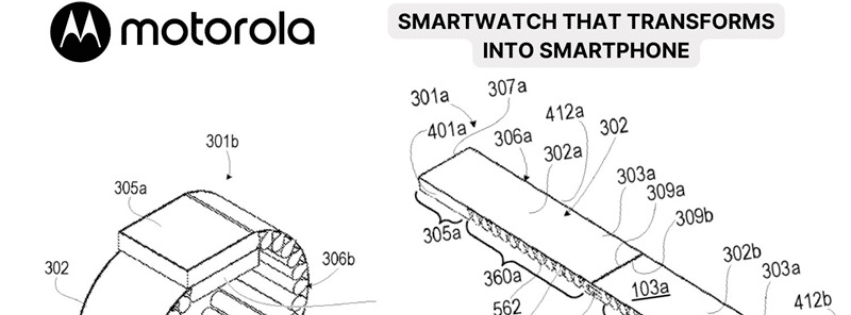
The design attempts to solve the limitations of current gadgets—namely, the tiny screens of smartwatches and the pocket dependency of standard smartphones—by combining them into a single piece of hardware.
- Smartwatch Mode: The device curves comfortably around the wrist with the flexible display facing outward. Magnetic closures hold the two ends together and allow the band to adjust for different wrist sizes.
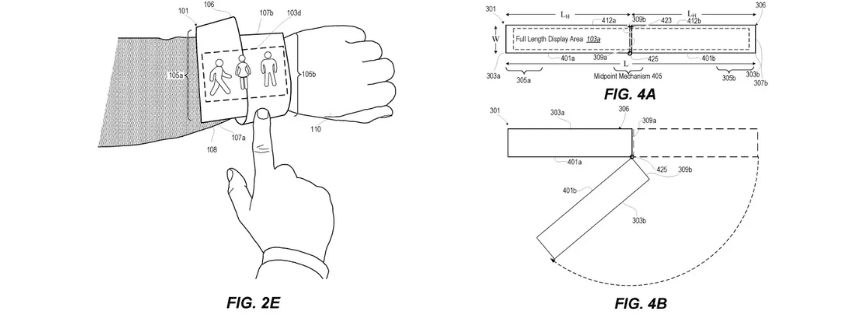
- Smartphone Mode: When removed from the wrist and straightened, the band can be unfolded and reconfigured. A pivot mechanism connects the display sections, allowing two halves to be placed side by side via magnets or interlocking parts to form a short, wide rectangular screen.
- Context-Aware Software: Built-in position sensors automatically detect the current configuration, shifting and reorganizing the user interface so the display responds dynamically to how it is being worn or held.
From Smartwatch to Smartphone
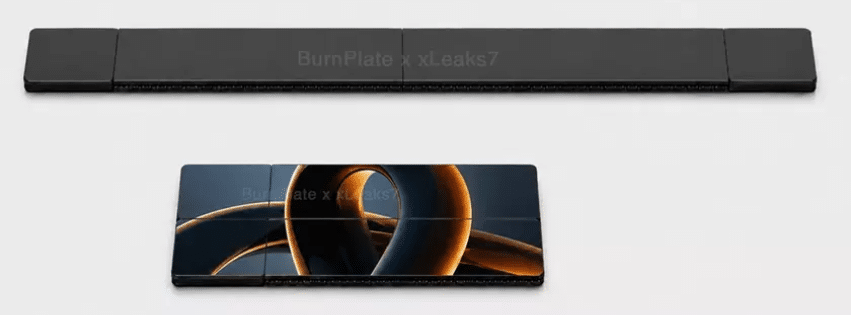
Unlike a traditional smartwatch, which is limited by the size of its display, Motorola’s concept uses much of the wristband itself as the screen. In smartwatch mode, the flexible display curves around the user’s wrist, with the screen facing outward. Magnets or interlocking components hold the two ends together and may allow the band to accommodate different wrist sizes.
When the user wants a larger display, the device can be removed from the wrist and unfolded. The two primary sections can then pivot and connect side by side, creating a wider rectangular display that functions more like a small smartphone.
The patent describes multiple configurations for the device. It can remain curved around the wrist, be completely straightened into a long display, or be folded into a shorter, wider screen. Sensors could recognize the device’s position and automatically adjust the software interface to match the selected configuration. That means the same display could present a compact smartwatch interface while worn and then reorganize apps and content when converted into handheld mode.
Solving the Limitations of Current Devices
Motorola’s concept addresses a problem shared by both smartwatches and foldable smartphones. Smartwatches provide convenient access to notifications, fitness tracking, messages, and other information without requiring users to reach for their phones. However, their small screens make activities such as viewing detailed charts, maps, photos, or lengthy messages more difficult. Foldable smartphones offer larger displays in a more compact package, but even when folded, they still need to be carried in a pocket or bag.
Motorola’s approach attempts to combine both devices into one. A user could wear the device throughout the day and access basic information directly from the wrist. When a larger screen is needed, the wearable could be removed and converted into a handheld display. Fitness tracking could be one of the most practical applications. Instead of viewing only basic statistics such as steps or heart rate on a small smartwatch screen, users could unfold the device to view detailed workout information, route maps, calorie data, and other fitness metrics.
Travelers and people who spend much of their day away from a desk could also benefit from a device that provides smartphone-style functionality without requiring a separate phone and smartwatch.
Potential Use Cases and Practical Challenges
For fitness enthusiasts, field workers, and frequent travelers, the hybrid design offers clear benefits. Users can track health metrics on the wrist and easily unfold the device to view detailed workout charts, maps, or messages without carrying a separate phone.
However, turning the patent into a commercial product involves significant engineering hurdles:
- Bulk and Weight: Distributing hardware components like batteries and processors across a wearable band could make the device uncomfortably thick or heavy on the wrist.
- Durability: A multi-panel display subjected to daily bending, unclasping, and environmental elements faces serious wear-and-tear challenges.
- Software and Battery: Developers would need to ensure apps transition smoothly between layouts without losing user input, while engineers must figure out how to maximize battery capacity in a slim chassis.
Motorola Has Been Exploring Flexible Displays for Years
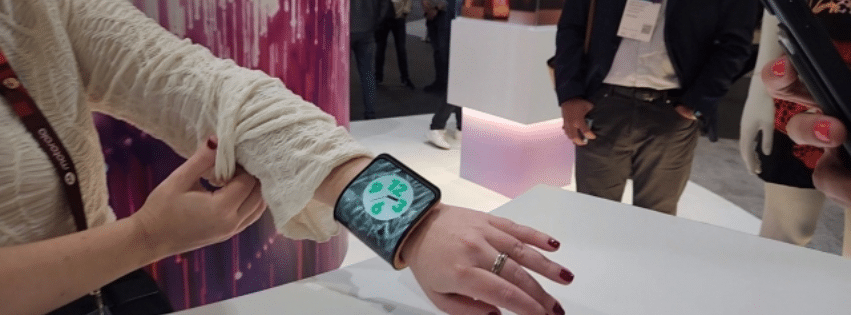
The patent is not Motorola’s first experiment with shape-changing mobile devices. In 2022, the company demonstrated a rollable smartphone concept capable of expanding its display from a compact 4-inch format to approximately 6.5 inches.
A year later, Motorola introduced its Adaptive Display Concept, featuring a 6.9-inch pOLED screen that could be positioned in several ways. The device could operate as a conventional smartphone, stand upright on a surface, or wrap around the wrist like a smartwatch. The latest patent takes a different approach. Rather than starting with a smartphone that transforms into a wearable, Motorola’s new concept begins as a smartwatch and expands into a phone-like display.
Significant Challenges Remain
Despite its potential, the concept faces several major engineering challenges before it could become a practical consumer product. The biggest issue may be size and weight. A device containing multiple display sections, batteries, processors, wireless components, and other hardware could be considerably thicker and heavier than a conventional smartwatch. Wearing it comfortably for an entire day could be difficult.
Durability is another concern. A flexible display would need to withstand repeated bending, unfolding, and wrapping around the wrist. It would also have to survive the everyday impacts, moisture, and movement that a typical smartwatch experiences. Battery life could present another obstacle. Powering a relatively large flexible display while maintaining a thin wearable form factor is a significant challenge. Motorola would need to balance screen size, performance, battery capacity, and comfort.
There is also the question of software. Applications would need to transition smoothly between smartwatch and smartphone layouts without losing information or creating awkward controls.
A Concept Worth Watching
For now, Motorola’s smartwatch-to-smartphone device remains a patent rather than an announced product. There is no confirmed release date, pricing, or indication that the company will bring the concept to market. Still, the patent demonstrates Motorola’s continued interest in rethinking how mobile devices are designed. If engineers can overcome the challenges surrounding thickness, durability, battery life, and usability, a wearable that transforms into a larger smartphone could eventually offer an intriguing alternative to carrying separate devices.
For the moment, however, Motorola’s futuristic watch-phone is best viewed as an interesting glimpse into what the company’s mobile technology could look like in the future — rather than a product consumers should expect to see on store shelves anytime soon.