New VW Steering Wheel Patent Wants to Fidget-Spin Your Road Rage Away
Fidget spinners may have popularized stress-relief gadgets in the last decade, but humans have been fiddling their way to calm for centuries — think Greek worry beads or Chinese Baoding balls. What’s been missing is a deliberate, built-in version of this concept inside a car, specifically a VW steering wheel. That’s exactly what Volkswagen appears to be exploring. A newly published patent, spotted by CarBuzz through Germany’s DPMA patent register, suggests the automaker is looking at ways to give drivers a literal outlet for tension, right where their hands already rest.
A Fidget Pad Built Into the VW Wheel
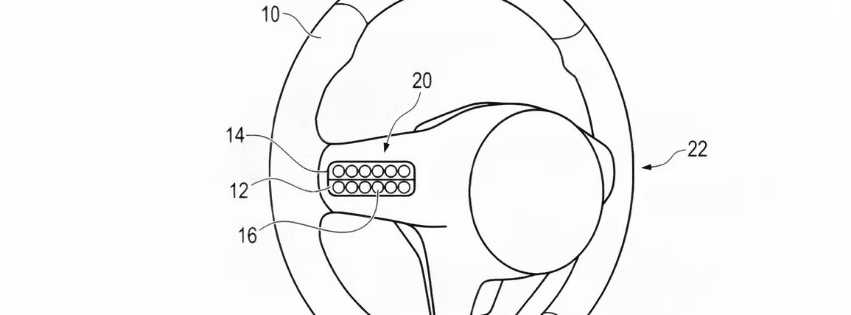
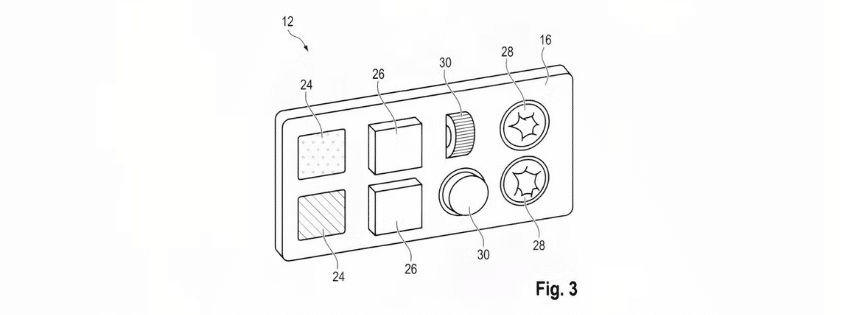
The concept described in the filing is fairly simple: a small tactile pad positioned on the steering wheel, placed exactly where a finger would naturally land during normal driving. Rather than committing to a single texture or mechanism, the patent outlines several possibilities — soft dimpled rubber, textured metal, or a haptic switch that clicks when pressed.
The clicking mechanism is the most inventive of the bunch. According to the patent, it would rely on a piece of embossed spring steel engineered to have two states — one stable, one metastable. Pressure bends the metal until it suddenly snaps through the metastable point, producing both a click and a responsive haptic pulse. It’s a small mechanical trick, but one that mimics the same satisfying snap-and-release sensation people already chase with pop-it toys and clicky pens. VW’s filing even floats the idea of roller balls as an alternative, though the switch mechanism is arguably the more novel of the ideas presented.
Room for Personalization — and Profit
Because the pad would be a removable, embedded component rather than a molded-in feature, Volkswagen could theoretically offer multiple versions for drivers to swap in and out. That opens up a small but interesting revenue stream — automakers are constantly hunting for ways to monetize vehicles after the initial sale, and a modular fidget accessory fits neatly into that trend. It probably wouldn’t be a blockbuster moneymaker, but it could be a low-cost way to inject some personality back into VW’s lineup, something the brand has arguably lost touch with in recent years.
It’s a smaller gesture than, say, the dimpled golf-ball shift knob that’s become a signature touch in the Golf GTI, but it pushes the idea of cabin tactility a bit further. If VW rolled this out across more models, it’s easy to imagine an aftermarket scene springing up around it, with third-party designers getting creative within the tight space constraints of a steering wheel hub.
Does This VW Steering Wheel Actually Reduce Stress?
There are two reasonable ways to view this patent:
- Skeptical take: It’s a gimmick with no real function — a novelty item bolted onto a serious piece of safety equipment, with no scientific backing behind claims that fidgeting meaningfully relieves stress.
- Optimistic take: Regardless of proven therapeutic value, it signals VW is thinking seriously about touch and tactility as part of the driving experience — and that’s worth something on its own.
The truth is, the science on fidget devices remains murky at best. There’s no strong body of research proving they reduce stress in any measurable way. But given how common road rage has become, even a low-cost, unproven intervention feels like a reasonable experiment for an automaker to try.
Interior Experience Is Becoming a Bigger Focus For VW
Ultimately, this patent seems less about solving road rage outright and more about a broader shift in how automakers think about cabin design. Audi, VW’s sister brand, has already been vocal about reworking interior experiences for its next generation of vehicles. A tactile steering wheel pad fits into that same philosophy — treating the cabin not just as a control center, but as a space people physically inhabit for hours at a time.
Whether or not squeezing a steering wheel switch actually calms anyone down, the underlying idea is sound: what a surface feels like under your fingers is part of the experience, whether automakers prioritize it or not.